
As one of the AT (Assistive Technology) facilitators in my district, I have a unique view of how students across the entire district are introduced to AAC. I noticed that there were great inconsistencies in how students began using or not using an AAC system. Around the fall of 2018, I began meeting with two other SLPs in my district, Sara Jerger, MA CCC-SLP and Bailey Hudson, MA CCC-SLP, who also have a great interest in AAC. We call ourselves the AAC Taskforce, a name developed by one of the other SLPs in the group. After some discussion on AAC and the direction our district was headed, we decided to implement a core word focus throughout the entire district. This was a much needed intervention to ensure equity, access, and consistency for our AAC users. We needed a way for our preschoolers to have immediate access to AAC, and for that system to follow them throughout their school career. However, there were some steps we needed to take before we could get there.
One of our very first tasks was to involve the administration from our Special Education department. We planned meetings with our AT administrator to make sure she was fully supportive of our proposal. Having the administrator as our lead was essential before moving forward with our vision. A top down approach would provide authority and funding, therefore we set up meetings with her to occur one time each trimester. Between meetings with the administrator, the AAC Taskforce would complete assignments to move us forward and closer to our goal of a district wide core word rollout.
Here are some of our first steps. These were decided upon as suggestions from the administrator and the AAC Taskforce. Over the course of a school year, we developed:
- an AAC philosophy statement to be shared with our SLP group; here are some of the resources we read while developing this plan: AAC Language Lab, Communication Bill of Rights, ASHA
- an AAC tool for administrators to use/reference when observing teachers with AAC users or SLPs to use for self-evaluation
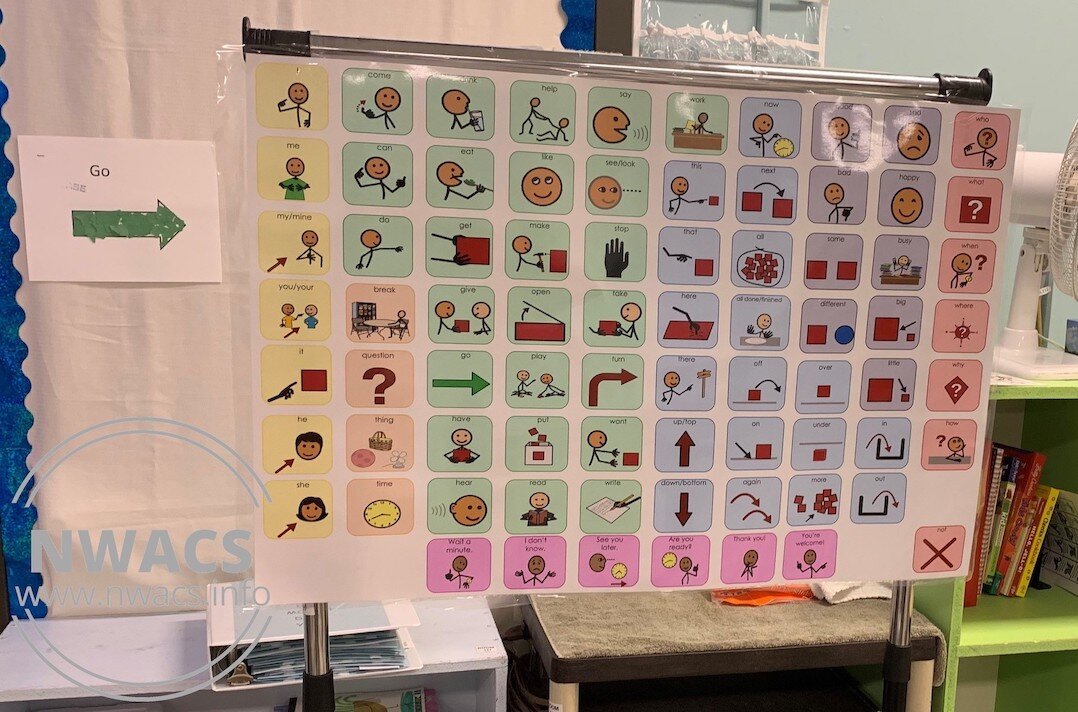
- a 76-button core word board that would be used by all SLPs across the district. A rationale for number of buttons chosen, symbol set, and color coding was developed and shared with all SLPs. A second document distributed with the core posters included guidance regarding core words and classroom activities, intervention, and data collection
- poster size core boards for classrooms with students using AAC; each classroom with AAC users received two core board posters
Once each SLP received the above mentioned documents, core word posters, and directions for printing replicas of the poster on 8.5 x 11 paper, they were encouraged to begin using them right away. They were to talk to their teachers about where in the classroom to place the posters. In my classroom, we decided to put the poster on a rolling garment rack (pictured below). Implementation was discussed at SLP staff meetings and in-building support was provided by members of the task force.
After one year, we were very pleased with our work, however it did not end there. We are in our second year of creating core word classrooms. Our goals for the 2019-2020 school year are:
- to develop training videos related to core word implementation that we can share with SLPs and teacher
- to create a document with templates and suggestions on how to write goals and objectives related to core words
- support at the building level in starting a core word vocabulary classroom
We continue to have backing from the Special Education administrator and without this we could not have made the gains we did during our first year. This is a work in progress and there have been some setbacks. Overall, the benefits are indescribable! There is a sense of cohesiveness for our AAC users, the staff that work with them, and their parents. ESA staff can move from building to building and model AAC with the same board. Parents can be involved with carry-over of the words that are being taught in class. Most importantly, our students are receiving the AAC intervention and support that they deserve.
How is your district addressing this issue of core words? Share your insights below.
2 responses to “District Core Vocabulary Initiative: How We Did It”
-
This is so great! I would love to talk more about how you created and implemented this!
-
Sure! You can email me at medwards15@hotmail.com. I can give you my contact information so that we can chat. This really has been an exciting project!
-



Share your comments or questions.