
This is a collection of information and resources related to supporting augmentative and alternative communication (AAC) in adolescence (high school and transitioning to adulthood).
This is not an exhaustive list. Do you have a favorite resource or strategy that we missed? Leave a comment to share!
Explore key issues related to this topic. Jump to:
- What does supporting communication development look like at this age?
- Key Goals
- What AAC Looks Like
- Helpful Implementation Strategies
Explore relevant resources. Jump to Resources
Jump to Useful Tips
Jump to Selected References
What does supporting communication development look like at this age?
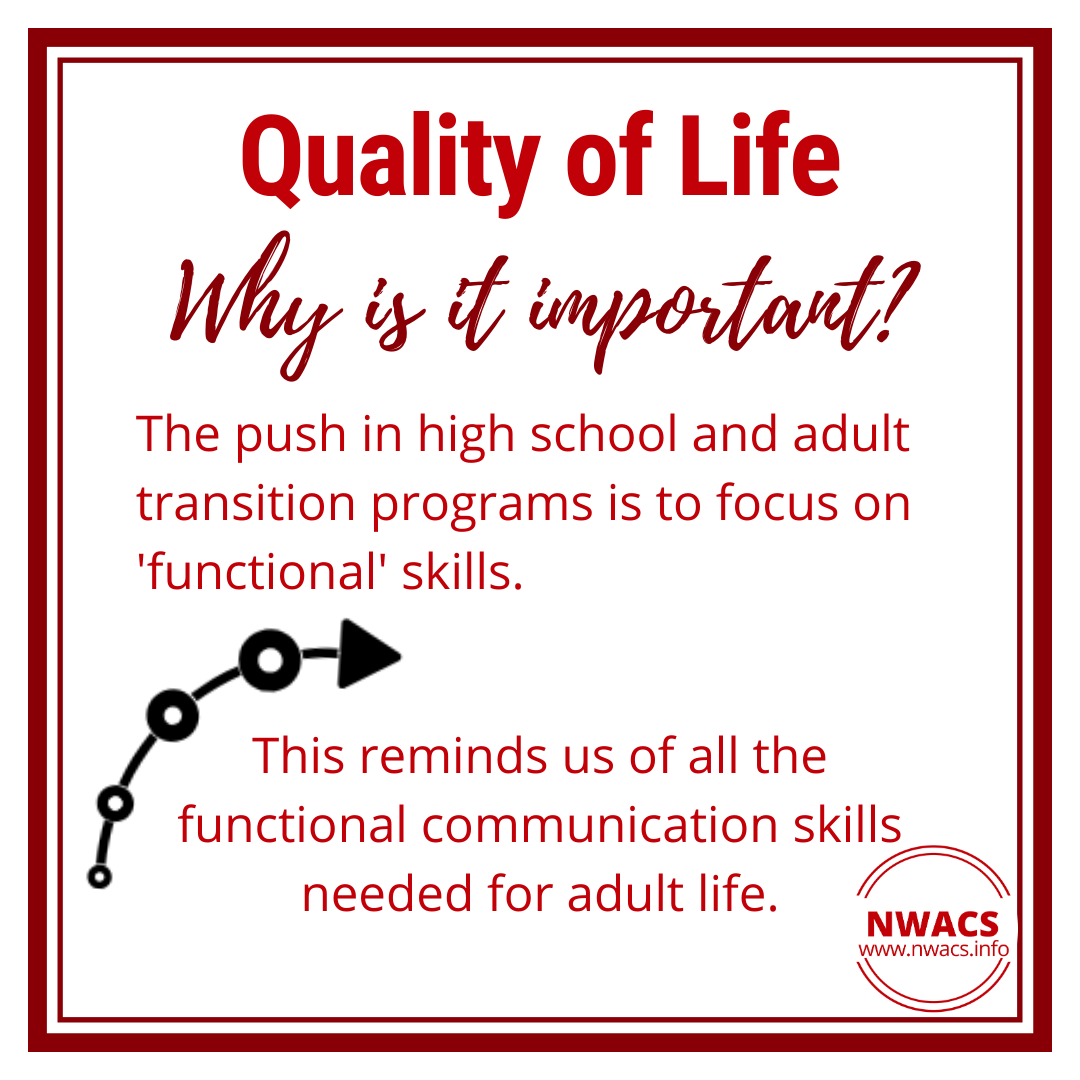
They are almost adults!
This realization often comes with a sense of panic. Because there is a limited amount of time left before they leave the school system. And fall off the “disability cliff” into adulthood.
Once a student graduates from high school or ages out of special education, there is a dramatic change in available services and supports. They are no longer eligible for special education and related services through the school system. They have to switch from their pediatrician to a doctor who sees adults. Other programs and services that are available to children are no longer options.
Adolescents. Students in high school and transition programs (around age 14 up to 21 or 22). In early childhood, the focus was on learning language and learning how to communicate. By Middle School and High School, the focus shifts to using language to learn. For students with intellectual and developmental disabilities, the focus in high school quickly shifts further to a focus on preparing them for life after they graduate or “age out” of the school system.
What does supporting communication development look like for this age group? It looks like planning ahead. What future does the adolescent envision for themselves? And it looks like starting to build bridges to help them get from here to there. How do we help them achieve that future?
“There comes a birthday upon which a young adult with disabilities ceases to receive services from their local school district and when support, well … falls off a cliff.”
Diary of a Mom
Facebook post 3/24/23
Transition Planning
Transition planning should be happening regularly from early childhood. But it becomes extremely important now. In Washington State, transition services must be included in the IEP once a student is 16 years old (if not sooner). The student and their family should be actively involved in developing the transition plan. The transition plan is a road map for the team. It lays out how they will help guide an adolescent to the end of their K-12 school journey and into adulthood.
Adulthood. In Washington State, this is either when the student graduates with a high school diploma or turns 21, whichever comes first. Note: if the student turns 21 after August 31st, they remain eligible for the rest of that school year.
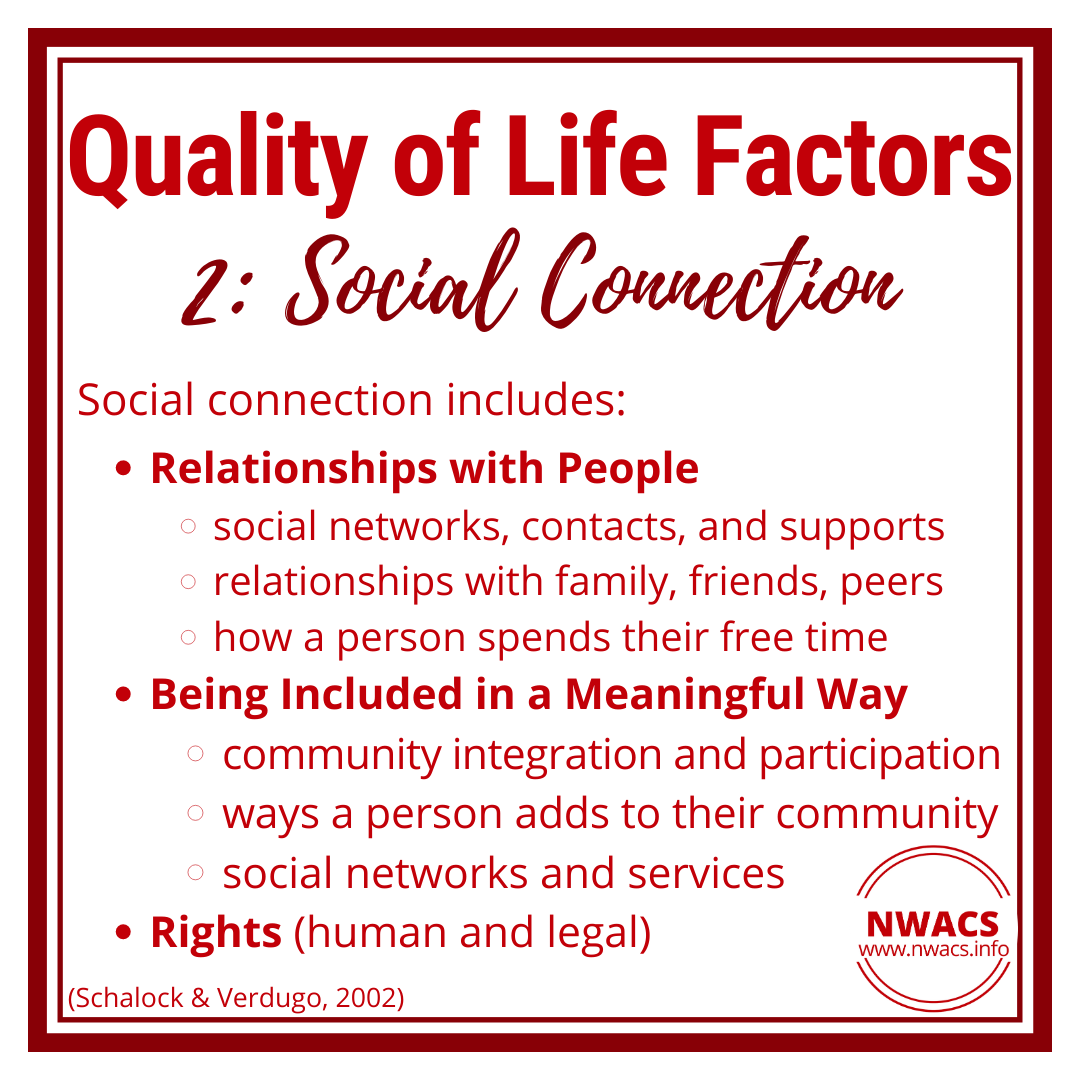
This is the time to start researching and making connections to develop a support system (and social network!) once they no longer have access to school-provided resources.
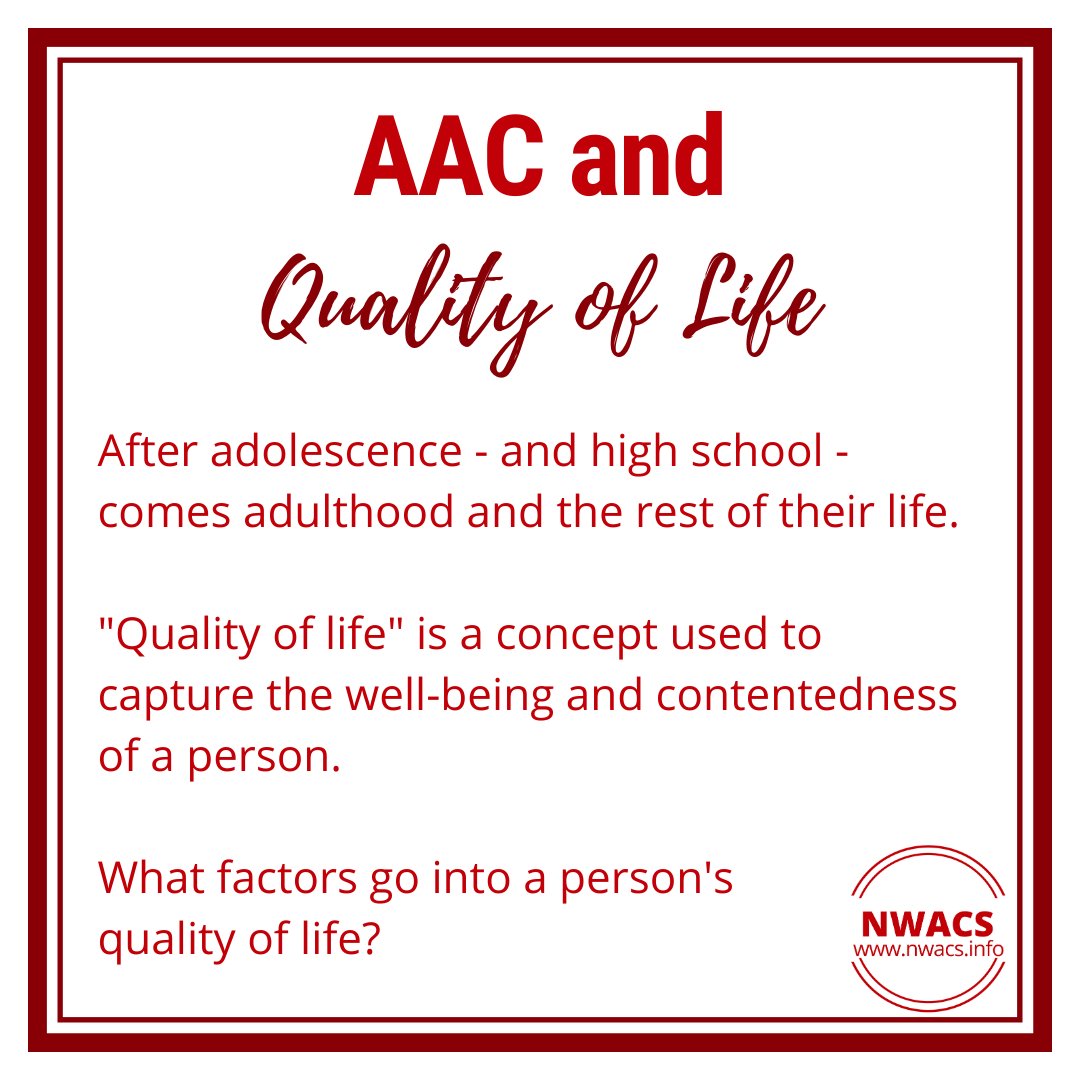
What resources and programs will be available to them? What community resources and social opportunities will be options? Are they interested in further education? Work? What interests do they want to pursue? How will they fill their time? How will they have the quality of life they want?
“Yet once they age out of special education—usually at 22—many young adults with developmental disabilities find a reality that is very different from the one they had gotten used to. When they lose their federal entitlement to special education, they are thrown into an underfunded and uncoordinated system in which few services are available as a matter of right. They must now contend with services from a variety of providers, financed by a variety of agencies, most of which are not sufficiently funded to cover everyone, and many of which are far too bureaucratic and insufficiently focused on ensuring that their clients can spend meaningful days integrated in community life. They fall, in other words, off the cliff.”
Samuel Bagenstos
2015
OWN AAC
They will still need their communication system after leaving the K-12 school system! If they have been using a school-provided AAC device or tools, now is the time to work toward getting them an AAC system that they own. And non-school-based team members need to know how to support and maintain that system.
In general, funding sources will allow benefits to be used to replace an AAC device every five years or so. If they own their AAC system, is it projected to
- meet their needs,
- and be in good working order
for the next couple of years after they leave high school (transition program)? What is the plan for when the communication system needs replacement or repair?
Does the adolescent have at least one back-up of their communication system? Every AAC user should have back-up communication systems for when their primary system is not available or not working.
Continue Working on Communication Skills
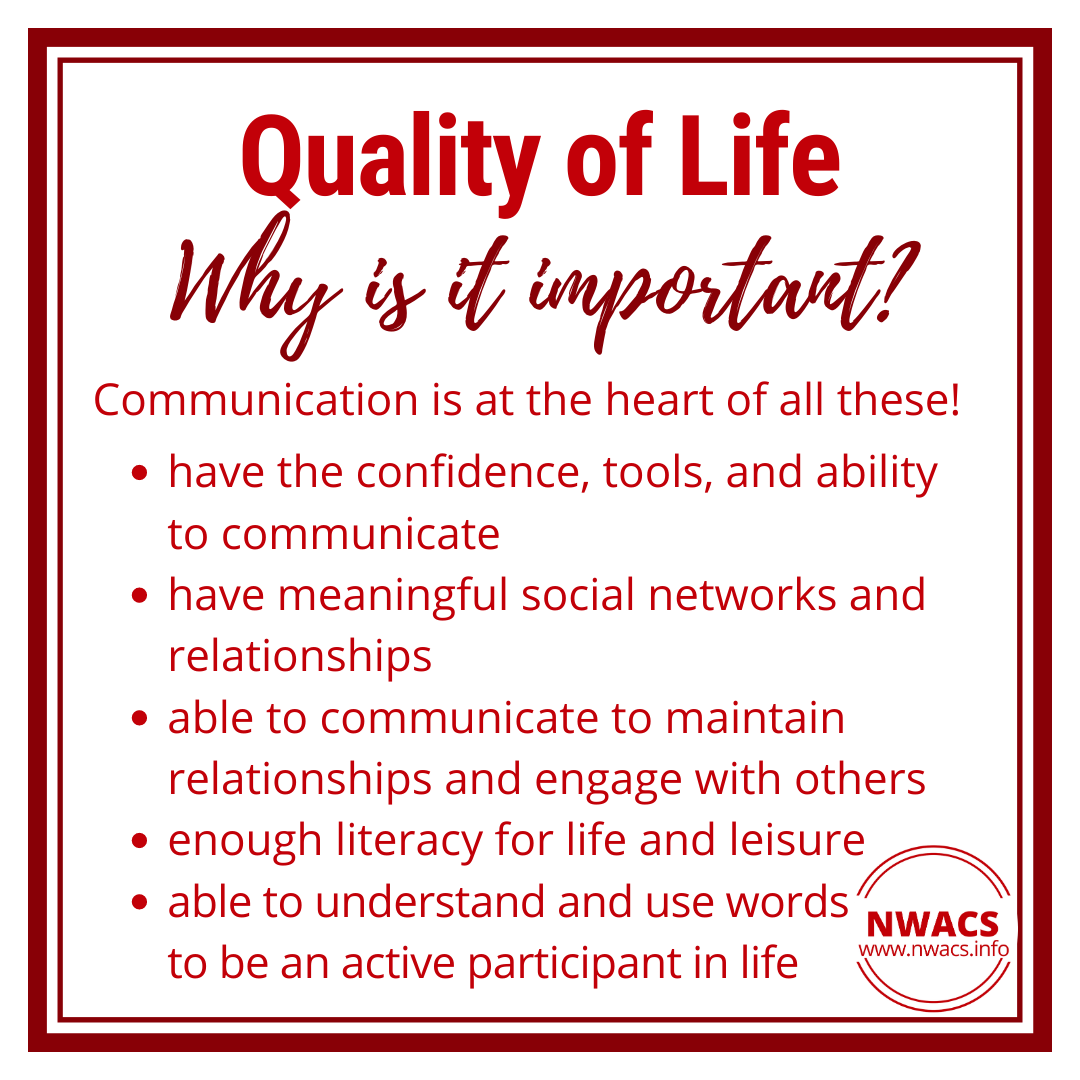
The reality is, many, if not most, agencies and organizations that provide job help to disabled adults look for the disabled person to have strong independent communication skills. Even many adult day programs need the people attending their program to be able to communicate without caregiver help. So it is important to continue developing communicative competence.
Read more about communicative competence.

Language for Adulting
Having access to words to talk about all the things their peers are able to talk about should start earlier. As an adolescent approaches adulthood, this is a key time to audit the words they have access to. Do they have understanding and access to words to talk about concepts such as:
- boundaries
- advocacy
- consent
- body parts (including genitalia)
- sex, sexuality
- gender, identity
- medical/physical needs and/or issues; health and illness
- abuse, neglect
- legal issues and encounters
- politics, voting
- rights, world events
- life, death
- emotions, mental health
- slang, swear words
- socializing; building and maintaining relationships
- college or post-secondary training
- work topics and issues
- money and finances
- using transportation
- directing own care, home needs and topics
- navigating resources and supports
Read more about having access to all the words they need and want in The Right to Dignity and Respect in All Interactions (Right #1)
“We know the ‘best’ victim is one who cannot tell or if they can tell, they are not likely to be believed.”
Bryen et al.
2003
Self-Advocacy and Self-Determination
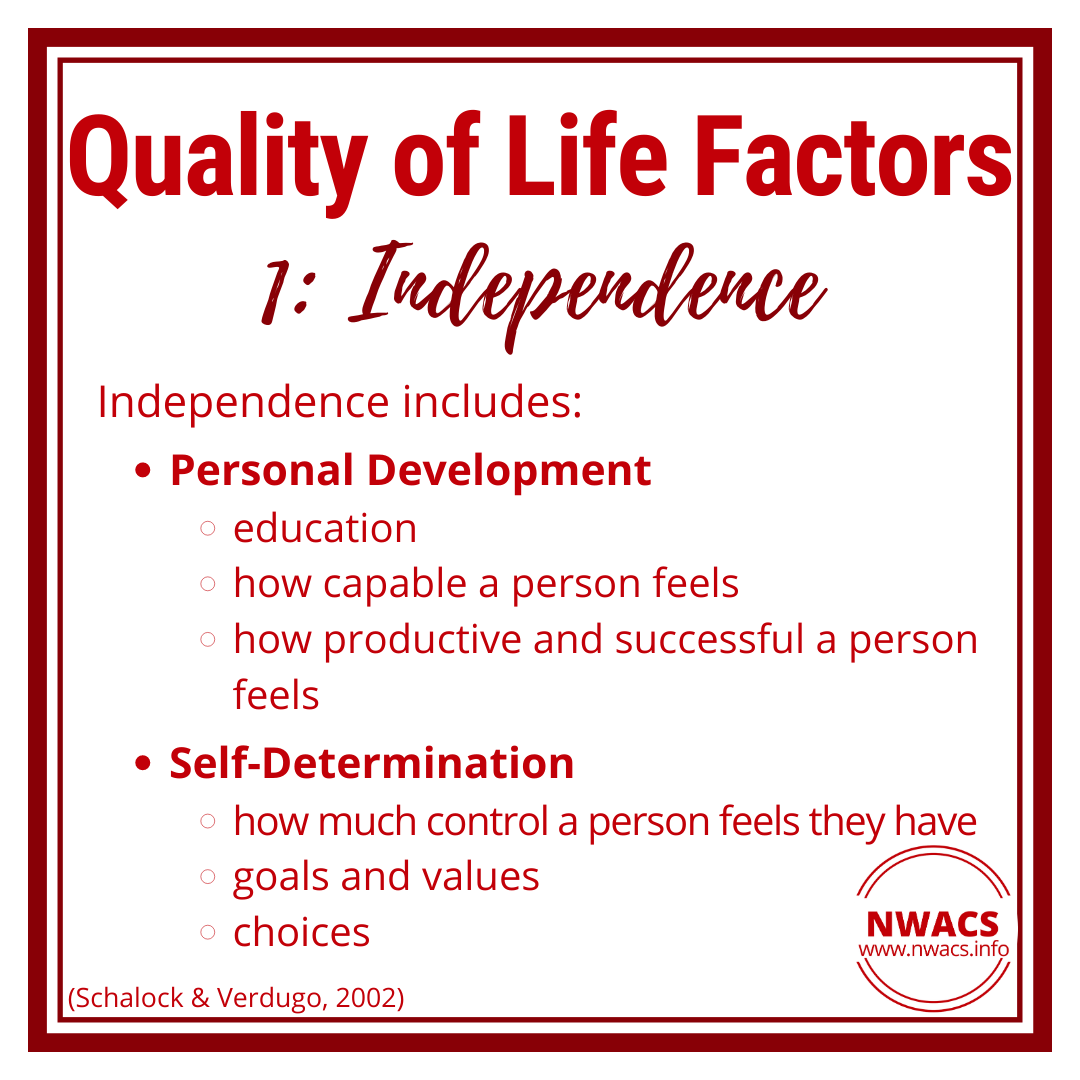
When a child is young, it is easy to focus on them learning language and how to communicate. Then we hope they can use those communication skills to show what they know/understand and to participate in school activities and tasks. In adolescence they are becoming more autonomous. They should be learning to advocate for themselves and to make decisions about their life.
As they approach adulthood, goals are:
- fully engaging and participating in their community,
- making decisions, and
- directing their life.
Read more about self-advocacy and self-determination:
Communication Rights
It is important for adolescents to know their communication rights! And to feel empowered to advocate for their rights to be honored.
Read more about the Communication Bill of Rights
Goals for adolescent AAC users include the ability and confidence to fully engage, participate and communicate in all environments and with all people they encounter. And having the strategic skills to choose when and how to do so.
Key Goals
- self-advocacy
- self-determination
- communicative competence
- literacy skills
- transitioning out of the school system into adulthood
- developing, maintaining, and sustaining social networks
- supportive and effective communication partners

What AAC Looks Like
- multimodal (also see this blog post for more information about multimodal communication)
- allows them to fully communicate about anything in all environments with all people they encounter
- matches the access needs and other features needed by the adolescent
Helpful Implementation Strategies
- supports and strategies are based on the communicator’s strengths, needs, likes, and interests rather than their age, so implementation strategies such as those mentioned on our AAC in School-Age resource page may still be useful
- be flexible
- have AAC options always available
- find motivation in their goals and interests
- modeling without expectation
- teach, don’t test
- focus on comments over questions
- model language for a variety of communicative functions
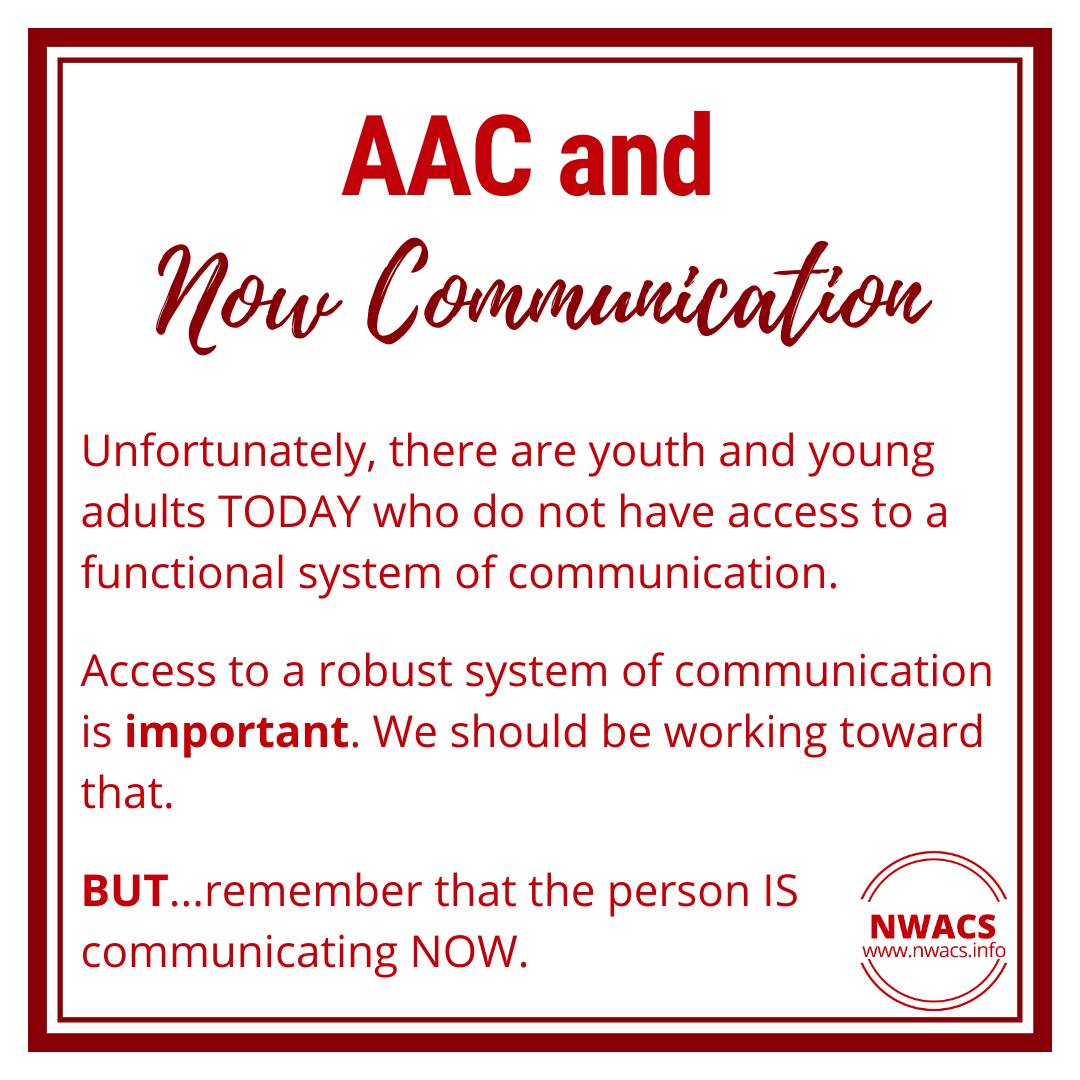
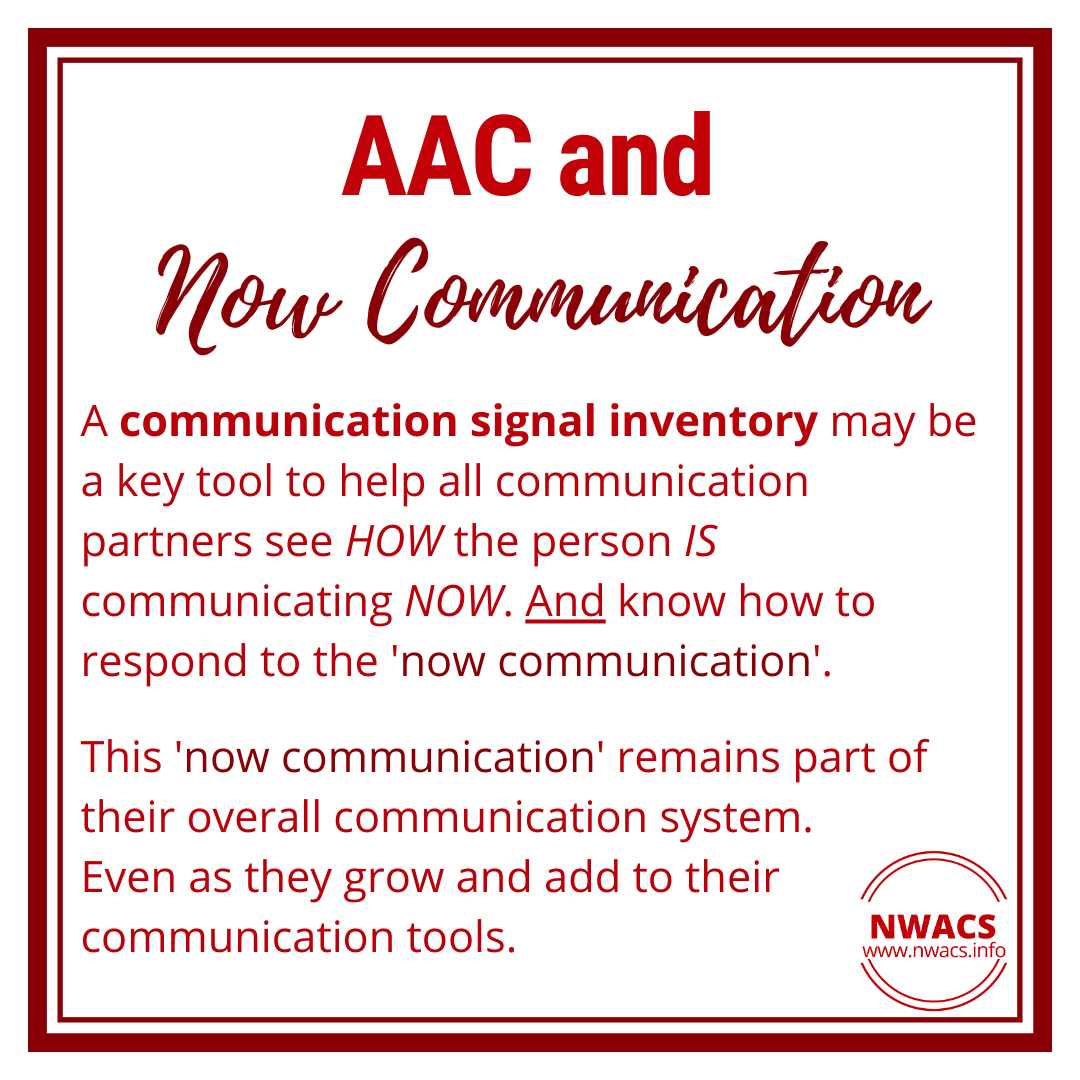
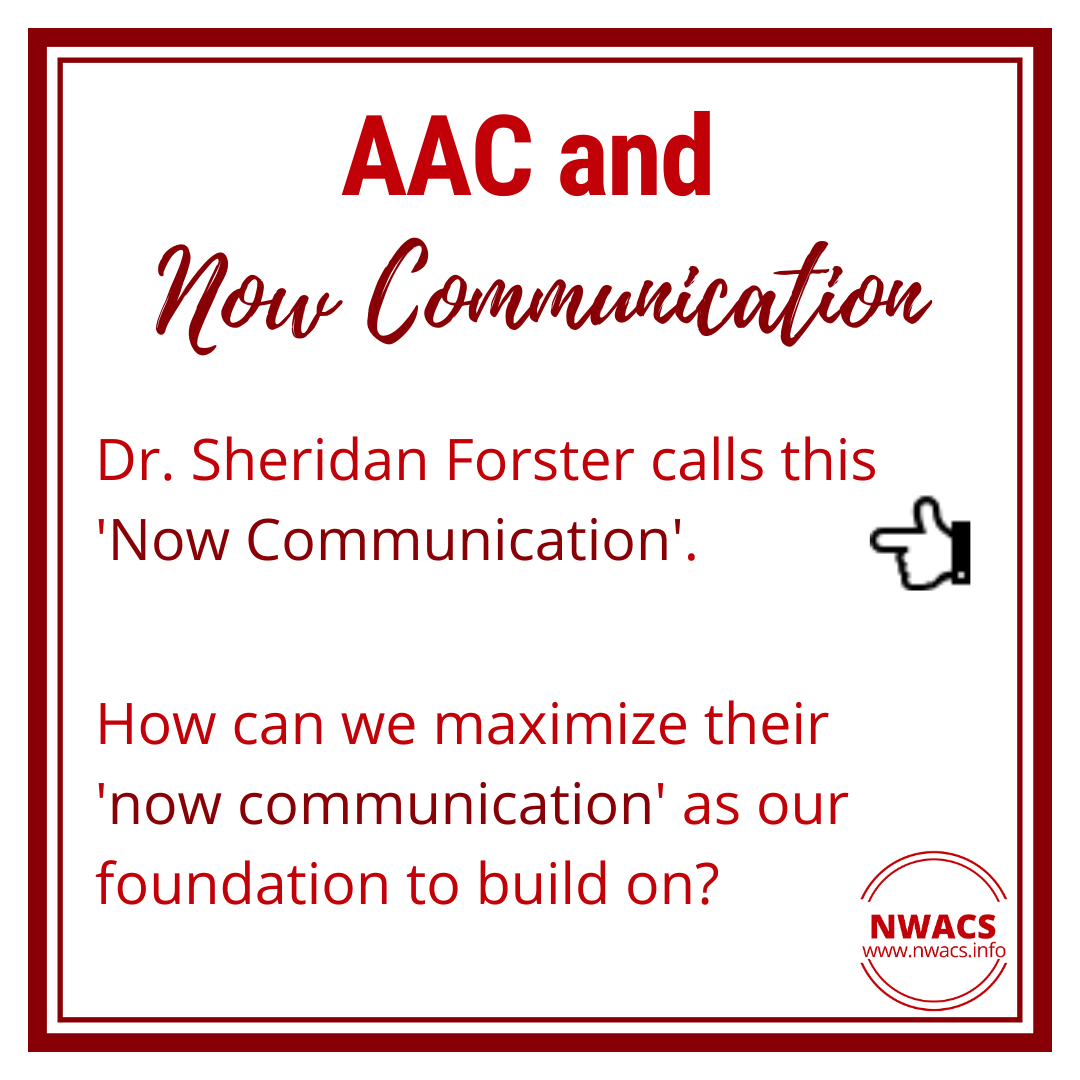
- accept all forms of communication
- presume potential/competence
- provide enough wait time
- communication becomes more about social closeness (building and maintaining relationships)
- develop conversation skills and strategies
- teens and young adults need language and skills related to
- physical, mental, emotional, sexual health (including sex education)
- boundaries, consent, healthy relationships
- medical, disability, care needs
- safety, abuse, rights
“For starters, the transition from adolescence to adulthood is often fraught with challenges. During this time, decisions are made about where to live, who to live with, how to spend time, how to deal with medical and healthcare issues, as well as how to address concerns about personal relationships, sex, safety, work and leisure activities.”
Augmentative Communication News
April 2006
Resources to Explore
Articles, Books, and Documents
- AAC for All: Culturally and Linguistically Responsive Practice (2022) by Mollie Mindel and Jeeva John
- Augmentative and Alternative Communication: Challenges and Solutions (2021), Billy Ogletree
- Chapter 5: Supporting Participation and Communication in Employment and Volunteer Activities for Adolescents With Complex Communication Needs by David McNaughton and Salena Babb
- Augmentative and Alternative Communication: Engagement and Participation (2017) by Erna Alant
- Fundamentals of AAC: A Case-Based Approach to Enhancing Communication (2023), Nerissa Hall, Jenifer Juengling-Sudkamp, Michelle L. Gutmann, and Ellen R. Cohn (eds)
- Supported decision-making when you cannot speak, AssistiveWare blog
- Transition Strategies for Adolescents and Young Adults Who Use AAC (2010), David McNaughton and David Beukelman (eds)
Websites
- NWACS website
- DO-IT Scholars: “DO-IT Scholars prepares Washington State high school students with disabilities for success in college and careers. Scholars attend Summer Study sessions, held during three consecutive summers at the University of Washington campus. This allows students to experience college life and work on self advocacy skills. Throughout the school year, Scholars connect with program staff, DO-IT Mentors, and each other using email and e-lists. They also meet in-person at DO-IT events, complete individual and group projects, and receive valuable information and support for the transition to college.”
- TalkingMats: “A Talking Mat is a visual communication framework which supports people with communication difficulties to express their feelings and views.”
- Think College (read more about this program of the Institute for Community Inclusion on the PrAACtical AAC blog)
“Students with CCN often do not get the support they need to participate with their peers throughout the school day, potentially leading to exclusion from full participation beyond the school years.”
Robinson & Soto
Podcasts and Webinar Recordings
- AAC in the Cloud presentation recordings
- AAC & Transition – Planning for an Everyday Life by Kathryn Helland (2021)
- AAC and Transition Planning – Supporting all students to make decisions for the future by Erin Sheldon (2020)
- CCN/Complex Bodies: Building Meaningful Activities for Older Students Who Are Switch Users/AAC Communicators With Transition in Mind by Sharon Redmon (2019)
- Transitioning from Developmental Language to Functional Language for Adolescents Who Use AAC by Katie Threlkeld and Laurel Duever-Collins (2023)
- AT in Transition QIAT Book Study Ch. 7
- First Bite Podcast episode 247 (2023-08-07): AAC Vocabulary Selections for Teens with Amy Miller Soontag
- LOMAH Disability Podcast – podcast from a mom planning for the future of her nonspeaking teen
- QIAT Session 7: AT Transition
Other Resources
- Framing a Future Tool from The Bridge School
- To Be Self-Determined – resources for self-determination
Useful Tips
- Remember that teens often focus on fitting in
- provide access to say the things their peers are saying
- Remember that teens are in the process of establishing their sense of self and their personal identity
- they are coping with their differences
- mental health and emotional health are high priority areas
- Remember they are becoming an adult. They deserve to be
- treated age-respectfully
- given the dignity of risk
- taught and be able to talk about and explore adult topics
- Communication partners need training and ongoing support!
- Focus on communicative intent, not how the message was communicated.
- Find your support networks!
- AAC Users:
- ISAAC PWUAAC Online Chats – The International Society for Augmentative and Alternative Communication (ISAAC) invites people who use AAC to meet online for informal chats. Check their website and/or their social media for dates and times.
- Facebook groups, such as:
- Ask Me, I’m An AAC User! (24-Hour Rule!) is a Facebook group run by AAC users where the thoughts and experiences of AAC users in the group are the focus
- Out and About: Creating Community Groups for AAC Users is a community group on Facebook for people of any age who use AAC
- The AAC Connection is a Facebook group for AAC users, family members, and communication partners
- The AAC User’s Social Network is a Facebook group for AAC users by AAC users. It is open to AAC users over 16 years old. You may have an assistant help you access the group.
- There may be other groups centered around your AAC device or communication app where you can connect with other AAC users.
- Families:
- Leslie Jeanne Berns Support Group for children who have communication challenges and their families (facilitated by University of Washington Speech and Hearing Sciences clinical faculty (SLP) and graduate students; meets virtually, monthly)
- Family AAC (hosted by NWACS) – This Facebook group (administrated by NWACS) is centered in Washington State, although any parent/caregiver interested in augmentative and alternative communication (AAC) is welcome. This group is for parents and other family members of children who are non-speaking or unable to meet all of their communication needs with mouth words. While this group does center the family perspective, other AAC stakeholders are welcome in the spirit of collaboration and shared learning!
- AAC vendors and app developers have pages on various social media channels. Many also have Facebook groups that can be a good place to connect with a support network.
- also look for social media accounts and/or Facebook groups related to specific diagnoses
- and look for social media accounts of AAC users and/or parents of AAC users
- Facebook groups, such as:
- Professionals:
- NAACHO: Networking for AAC and Hangout – This Facebook group (administrated by NWACS) is for SLPs in Washington State who support people who use AAC. It is for collaboration, networking, and supporting each other in the grand adventure of augmentative and alternative communication.
- AAC vendors and app developers have pages on various social media channels. Many also have Facebook groups that can be a good place to connect with a support network.
- also look for social media accounts and/or Facebook groups related to specific diagnoses
- and look for social media accounts of AAC users
- Facebook groups, such as:
- AAC Users:
Selected References
- “Adolescents/Adults with DD.” Augmentative Communication News. April 2006; 18(1), 10-12. Available from: https://www.augcominc.com/newsletters/newsletter_44.pdf
- Bagenstos, Samuel R. “The Disability Cliff.” Democracy 35 (2015): 55-67. Available at: https://repository.law.umich.edu/articles/1722
- Brown, Ivan & Hatton, Chris & Emerson, Eric. (2013). Quality of Life Indicators for Individuals With Intellectual Disabilities: Extending Current Practice. Intellectual and developmental disabilities. 51. 316-32. 10.1352/1934-9556-51.5.316
- Bryen, D.N., Carey, A., & Frantz, B. (2003). Ending the silence: Adults who use augmentative communication and their experiences as victims of crimes. Augmentative and alternative communication, 19(2), 125-134.
- Bryen, D. (2023). Services for Young Adults Using AAC Transitioning to Adulthood. In Fundamentals of AAC: A Case-Based Approach to Enhancing Communication (pp. 215-226). Plural Publishing.
- McNaughton, D., & Bryen, D. (2007). AAC technologies to enhance participation and access to meaningful societal roles for adolescents and adults with developmental disabilities who require AAC. Augmentative and alternative communication (Baltimore, Md. : 1985). 23. 217-29. 10.1080/07434610701573856
- Schalock, Robert & Keith, Kenneth & Verdugo, Miguel & Gómez, Laura. (2011). Quality of Life Model Development and Use in the Field of Intellectual Disability. 10.1007/978-90-481-9650-0_2



Share your comments or questions.