
“an adult advisor wearing glasses and a black top and a student in a wheelchair wearing a blue garment, communicate using an AAC device in an office setting” by by UK Human Development Institute (public domain) is licensed under CC by 3.0 (Adults IDD Evaluation Tools)
This is a list of tools and resources geared toward evaluating adolescents and adults with complex communication needs and intellectual and developmental disabilities (IDD).
Free tools and resources are listed in alphabetical order first, followed by paid tools and resources. Be sure to explore both! Have a favorite tool or resource for evaluating adolescents and adults with complex communication needs that we missed? Leave a comment to share!
This is not an exhaustive list of all possible evaluation tools. Inclusion on this list is not an endorsement or recommendation. This information was current at the time it was posted. If you spot a needed update, please send us an email at info@nwacs.info. Thank you for helping us keep this information up-to-date and useful!
Free Evaluation Tools and Resources

AAC Assessment Planning Tool (APT)
The APT is a framework for choosing AAC assessment tools based on the person’s current level of communicative independence by Grant Wood AEA. The APT suggests many of the assessments listed on this page.
Download the AAC Assessment Planning Tool (APT)
For more information:
- Listen to this Talking With Tech Podcast episode for an interview with Julie Freed (SLP), co-creator of the APT, to find out why and how it was created, as well as how Julie has found it to be helpful.
- Also check this slide deck from Grant Wood Area Education Agency AAC Resource Team

Age-Appropriate Transition Assessment Planning Guide
This guide from OCALI introduces the planning process for transition assessment.

Assessment of Learning Process (ALP) for AAC
The ALP for AAC is a tool to understand progression with touch, switch, head tracking and eye tracking in AAC Teaching. The ALP for AAC breaks down the access method learning process into 3 broad stages with 8 specific phases.

Checklist of Communicative Functions and Means
The Checklist of Communicative Functions and Means helps to determine how and when a person communicates.
Learn more and download the Checklist of Communicative Functions and Needs

Communication Environment Checklist
The Communication Environment Checklist helps evaluate environments for communication accessibility. It uses aspects identified by Von Techner & Grove (2003), Burkhardt et al (2012) and Porter (2013).
View the Communication Environment Checklist
Make a copy of the Communication Environment Checklist to use
Communication Matrix
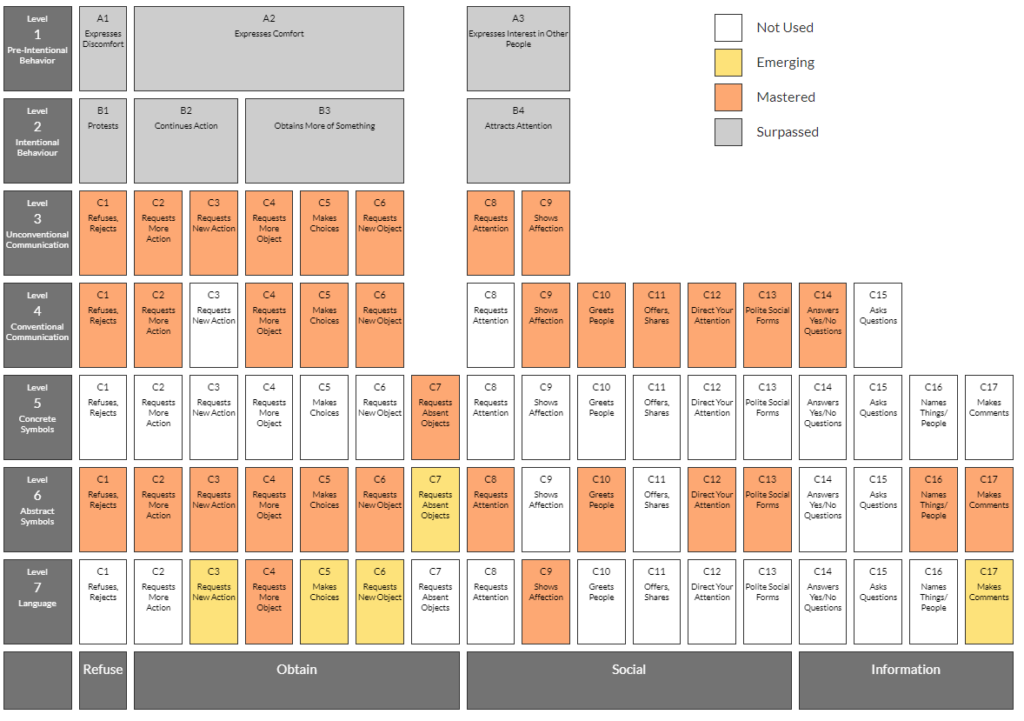
The Communication Matrix is a questionnaire for teams to discuss the communication status, progress, and unique needs of anyone functioning at the early stages of communication or using forms of communication other than speaking or writing. It results in a visual representation of skills and can be used to track progress over time. *It is free or low-cost.
Visit the Communication Matrix website
For more information:
- Also check out Using the Communication Matrix Creatively by Karen Natoci on the USSAAC blog

Communication Sampling & Analysis (CSA)
The CSA is a tool for sampling and analyzing communication behavior in natural interactions. It is designed for infants, toddlers, and children with multiple physical, sensory, speech, and cognitive/linguistic challenges. *The CSA also offers a yearly subscription
Communication Signal Inventory (CSI)
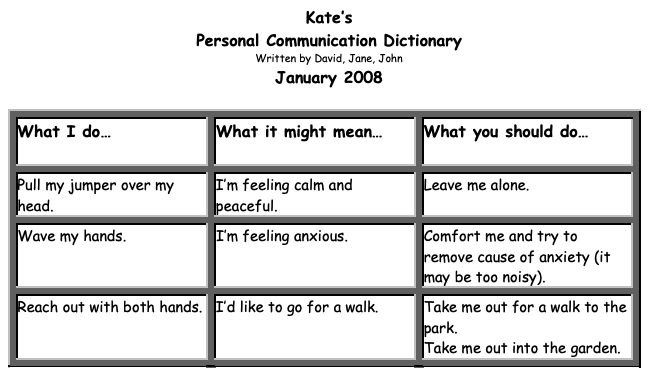
The CSI is an inventory of a child’s communicative signals, what they mean, and how communication partners should respond.
Watch this webinar recording of Dr. Cress on YouTube: How to Use a Communication Signal Inventory to Assess and Plan Intervention for Early Communicators
For more information:
- Also check out the How to make a Personal Communication Dictionary resource (PDF) from Oxford Health NHS Foundation Trust

Continuum of Language Expression (COLE)
The COLE is a tool to evaluate early language development. It is an informal tool intended to be filled out as a team based on observations of the person. The COLE can be used to track progress over time.
View and make a copy of the Interactive LCPS Continuum of Language Expression Google Doc
For more information:
- Listen to this Talking With Tech podcast episode for a discussion of the COLE (Chris and Rachel talk about before the interview)
- This Piktochart of the COLE outlines typical language development from birth to age 2 with targets from the COLE

Dynamic AAC Goals Grid 3 (DAGG-3)
The DAGG-3 is a tool that provides a systematic means to identify a person’s current communication abilities and guides the selection of appropriate goals. It can be used to track progress over time. Activities for each goal are included as well as a path for advancing skills.
Learn more and access the DAGG-3 on the Tobii Dynavox website

Dynamic Assessment of Nonsymbolic Communication
The Dynamic Assessment of Nonsymbolic Communication is an informal assessment for people who communicate through nonsymbolic means. See appendices in the article/manual linked below.
View and download ‘A manual for the dynamic assessment of nonsymbolic communication’
Early Development of Emotional Competence (EDEC)
The Early Development of Emotional Competence is an assessment tool for children with complex communication needs (CCNs) ages birth to 10 years. It was designed to gather information about how families and professionals talk about emotions with children with CCN. It is useful to help ensure that a child’s communication intervention includes language to discuss emotions in ways that are consistent with the values and goals of the family. English, Korean, and Mandarin Chinese versions available. See supplemental Materials in the article linked below.
Learn more and download the EDEC assessment tool
Related:
- The Early Development of Emotional Competence Profile (EDEC-P) is a suggested profile to distill information gathered from the EDEC tool and present an analysis of perceived challenges, next steps, and possible strategies to achieve goals related to enhancing emotional communication in people with CCN that could benefit from AAC. English and Spanish versions available.

Family Impact of Assistive Technology Scale for Augmentative and Alternative Communication (FIATS-AAC)
The FIATS-AAC is a parent-report questionnaire designed to detect functional change associated with augmentative and alternative communication (AAC) interventions for children and youth, ages 3 to 18 years, and their families. It has 13 dimensions to measure overall and domain-specific functioning associated with AAC system use.
Learn more and access the FIATS-AAC on the Holland Bloorview website

Feature Matching Checklist
The Feature Matching Checklist from Technology & Language Center helps determine the features needed in an AAC system. The checklist gathers information about the individual’s sensory, motor, and communication needs. You have to sign up to gain access to their free resources.
Access the Feature Matching Checklist on the Technology & Language Center website

Matching Person and Technology (MPT) Assessment
The Matching Person and Technology process is a person-centered resource. It can be used to foster user engagement and guide a team in the selection of the most appropriate assistive technology or support solution.

QUAD Profile
The QUAD is an analysis tool that allows you to take a sample of language and compare it against a set of checklists. The checklists look at four levels of language: vocabulary, morphology, syntax, function.
Visit the AAC Language Lab website to download the QUAD Profile
For more information:
Responsiveness of an AAC Outcome Measure: Clinical Case Report Form
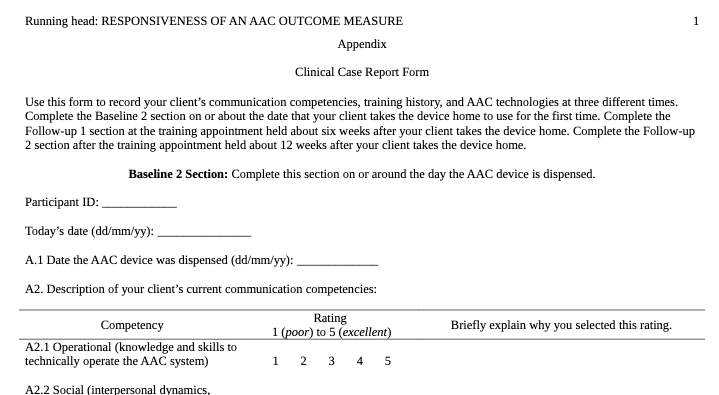
The Responsiveness of an AAC Outcome Measure is form to record a client’s communication competencies, training history, and AAC technologies to track changes at three times over the first 12 weeks a client has an AAC system. See the supplemental material for the article linked below.
Learn more and download the Responsiveness of an AAC Outcome Measure

The Bridge Assessment
The Bridge is an early literacy and language assessment framework based on observation and portfolio development/analysis.
The Bridge School tools
The Bridge School offers a variety of links to useful tools for documenting present levels of performance (and assessment). Be sure to take a look at the All About Me Inventory!

The Pragmatics Profile for People who use AAC, 2nd Edition
The Pragmatics Profile for People Who Use AAC is a tool to collect information about a person’s reasons to communicate and their ability to participate in interactions and describe a person’s functional communication skills.
Visit the Ace Centre website to download the Pragmatics Profile (2nd Edition)

The SETT Framework
The SETT Framework is a tool that supports teams in gathering and organizing information for a thorough assistive technology assessment and guides decision-making for intervention. The SETT Framework model was developed by Joy Zabala.

Tool for Analysis of Language and Communication (TALC)
The TALC is a language sampling tool for multimodal communicators from Technology & Language Center. You have to sign up to gain access to their free resources.

Vicki Clarke resources
Vicki Clarke (SLP) has written several informative articles on the PrAACtical AAC website regarding AAC assessments.
Paid Evaluation Tools and Resources

AAC Evaluation Genie (iOS app)
The AAC Evaluation Genie is an informal diagnostic tool that is intended to assist with identifying skill areas that relate specifically to the language representation methods commonly found on augmentative communication systems. There are 13 subtests that can be administered with screening options available for each subtest.
AAC Language Charts
Available as part of the subscription (currently $19.95 per year), AAC Language Lab resources includes charts for parts of speech, pragmatics, morphology, AAC language stages, and sentence types. Also check out their Evaluation Tool tab.
Achieving Communication Competence
The Achieving Communication Competence assessment details a three-step process for creating an effective plan for people with severe communication disabilities.
Augmentative & Alternative Communication Profile: A Continuum of Learning (AACP)
The AACP allows you to assess communication skills and design intervention for the ever-changing needs of people who use AAC systems. It both measures skills and guides intervention.
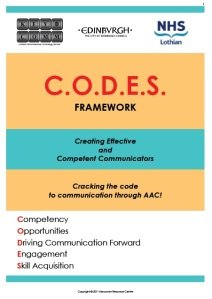
C.O.D.E.S. Framework
The C.O.D.E.S. Framework has been developed to help monitor progress of a person using an AAC system.
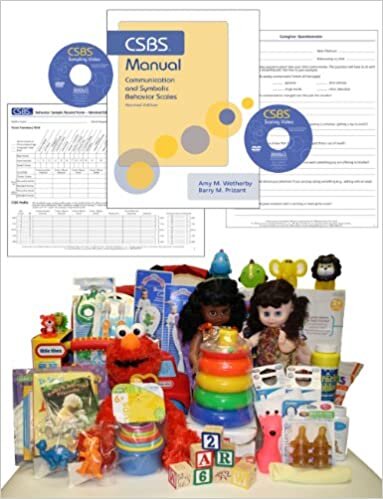
Communication and Symbolic Behavior Scales (CSBS)
The CSBS consists of 22 communication and symbolic rating scales grouped into seven clusters. This assessment is designed to be used with infants and toddlers whose functional communication age is between 6 and 24 months and for children up to 72 months who exhibit atypical development.
Visit the Brookes Publishing website
Related:
- Communication and Symbolic Behavior Scales Developmental Profile (CSBS DP) – this paid tool measures 7 key language predictors in young children
- CSBS DP Infant-Toddler Checklist – this free tool offers a way to screen young children to determine if a developmental evaluation is needed
Communication Matrix
The Communication Matrix is a questionnaire for teams to discuss the communication status, progress, and unique needs of anyone functioning at the early stages of communication or using forms of communication other than speaking or writing. It results in a visual representation of skills and can be used to track progress over time. *It is free or low-cost.
Visit the Communication Matrix website
For more information:
- Also check out Using the Communication Matrix Creatively by Karen Natoci on the USSAAC blog
Communication Sampling & Analysis (CSA)
The CSA is a tool for sampling and analyzing communication behavior in natural interactions. It is designed for infants, toddlers, and children with multiple physical, sensory, speech, and cognitive/linguistic challenges. *The CSA also offers a yearly subscription
Evaluating Acquired Skills in Communication-3 (EASIC-3)
The EASIC-3 is a five-level inventory developed for use with children who are developmentally disabled, have autism, or have moderate to severe cognitive and language disorders. It provides assessment items in the areas of prelinguistic skills, semantics, syntax, morphology, and pragmatics. Developed to evaluate children ages 3 months through 6 years.
Every Move Counts, Clicks and Chats (EMC3)
The EMC3 is a sensory based approach to communication and assistive technology for people with significant sensory motor differences, developmental differences and autism.
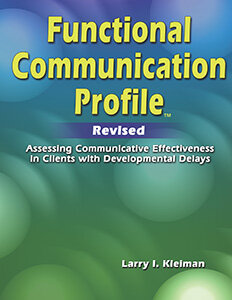
Functional Communication Profile – Revised (FCP-R)
The FCP-R yields an overall inventory of the person’s communication abilities, mode of communication (e.g. verbal, sign, nonverbal, augmentative), and degree of independence. The FCP-R is appropriate for people who range between mild and profound deficits.
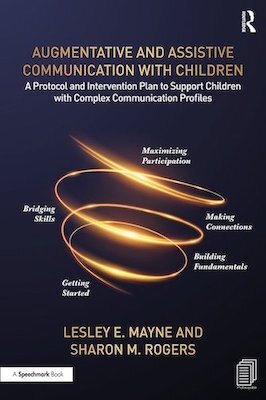
Hear Me Into Voice: An AAC Protocol for Children with Complex Communication Profiles
This protocol compiles information about the child’s preferences, feelings, social graces, vocabulary, and tools to then be tied to communication and participation. The protocol is published in the book Augmentative and Assistive Communication With Children: A Protocol and Intervention Plan to Support Children with Complex Communication Profiles by Lesley Mayne and Sharon Rogers (2020).
MacArthur-Bates CDI
The MacArthur-Bates CDI is a set of parent-report vocabulary inventories. These inventories are intended for children aged 8–37 months, but may also be used with older children who have developmental delays.
Visit the Brooks Publishing website
For more information:
- More information can be found on the MB-CDI website, including information about adaptations for a number of other languages.
A Model of Observational Screening for the Analysis of Interaction and Communication (MOSAIC)
The MOSAIC was developed in order to provide a structured approach to observing the communication skills of adults and children with an intellectual disability.

The Roadmap of Communication Competence (ROCC)
The ROCC is a rubric tool to assess, plan, and evaluate communication outcomes.

Social Networks
The Social Networks is an assessment and intervention planning tool designed to help people, their families and professionals determine the most appropriate technologies and communication strategies for people with complex communication needs.
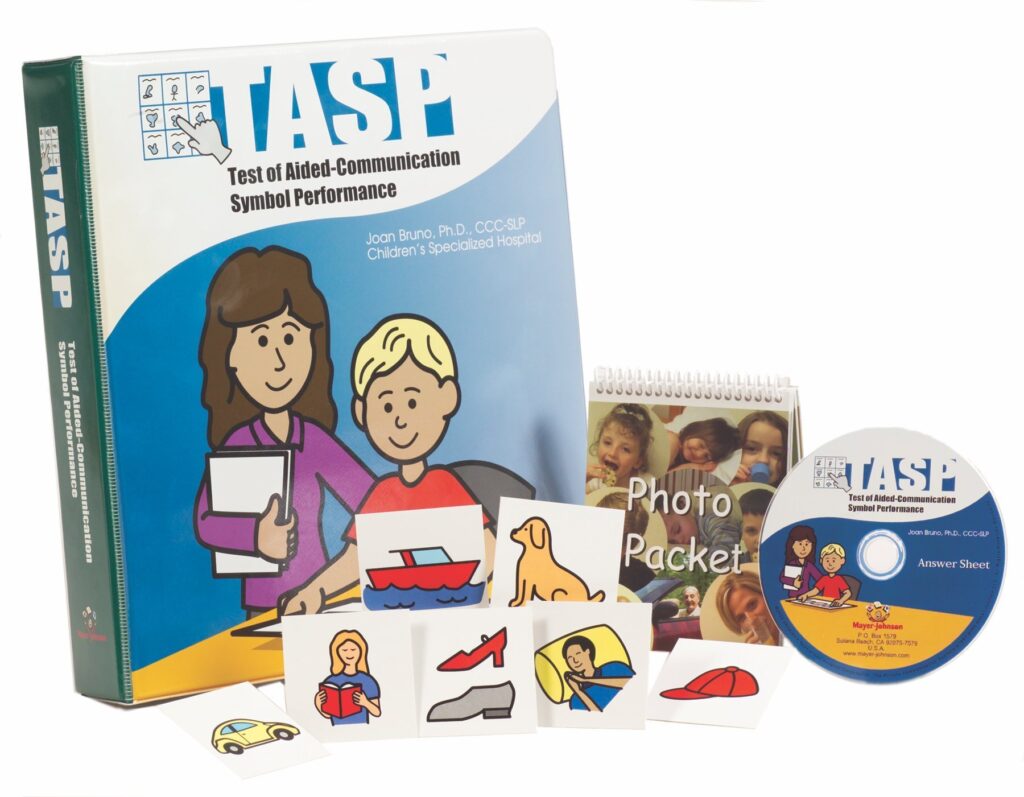
Test of Aided-Communication Symbol Performance (TASP)
The TASP provides a starting point for designing or selecting an appropriate AAC device page set. TASP uses results to design communication boards and establish appropriate AAC intervention goals and strategies targeting symbolic and syntactic development.
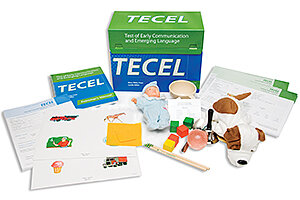
Test of Early Communication and Emerging Language (TECEL)
The TECEL assesses the earliest communication behaviors and emerging language abilities in infants and toddlers up to 24 months old.
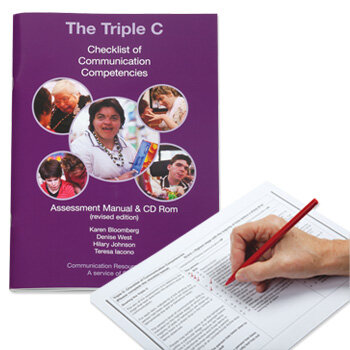
Triple C
The Triple C is a valid and reliable tool that makes it possible to assess skills that are observable, focus on functional skills and assess early communication skills. It is designed to use with teenagers or adults with little or no speech.



Share your comments or questions.