
This is a list of tools and resources that may be helpful when evaluating adults with acquired communication impairments (e.g. from stroke, TBI, ALS, etc.). These are adults who had neurotypical communication skills and lost them (or are progressively losing them) due to injury or disease.
Do you have a favorite tool or resource for evaluating adults with acquired or progressive communication impairments that we missed? Leave a comment to share!
This is not an exhaustive list of all possible evaluation tools. Inclusion on this list is not an endorsement or recommendation. This information was current at the time it was posted. If you spot a needed update, please send us an email at info@nwacs.info. Thank you for helping us keep this information up-to-date and useful!
Evaluation Tools and Resources for Adults with Acquired Communication Impairments
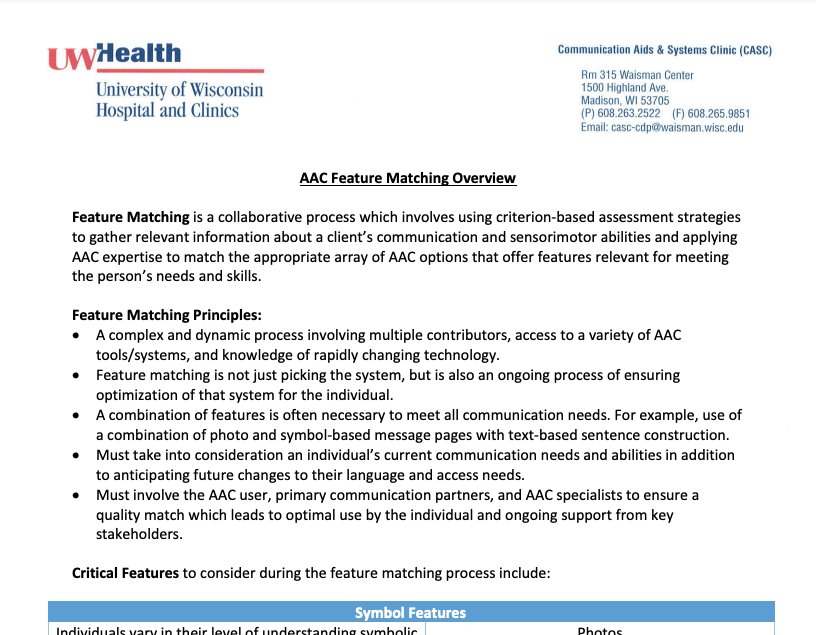
AAC Feature Matching Overview (Waisman Center)
Checklist of critical features to consider during the feature matching process.

ALS Functional Communication Scale
A means for documenting the communication abilities as well as the changes resulting from AAC interventions for patients with ALS developed by Amy Roman, MS, CCC-SLP
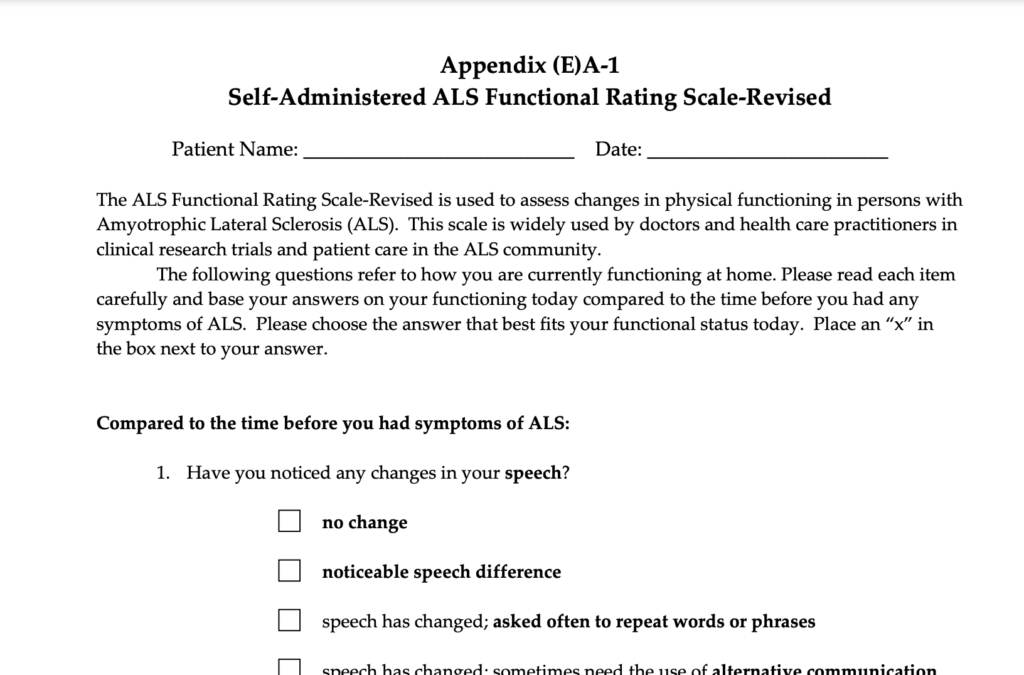
ALS Functional Rating Scale-Revised (ALSFRS-R)
“The ALS Functional Rating Scale-Revised is used to assess changes in physical functioning in persons with Amyotrophic Lateral Sclerosis (ALS).” It examines function status and detects changes over time.

Aphasia Assessment Materials from UNL
Includes link to:
- The Multimodal Communication Screening Task for Persons with Aphasia
- Scanning/Visual Field/Print Size/Attention Screening Task
- Aphasia Needs Assessment
- AAC-Aphasia Categories of Communicators Checklist
C.O.D.E.S. Adult Framework
The C.O.D.E.S. Framework has been developed to help monitor progress of an individual using an AAC system. It is a framework for measuring effective communication for adults with acquired disabilities and allows you to identify and monitor skill development over time.
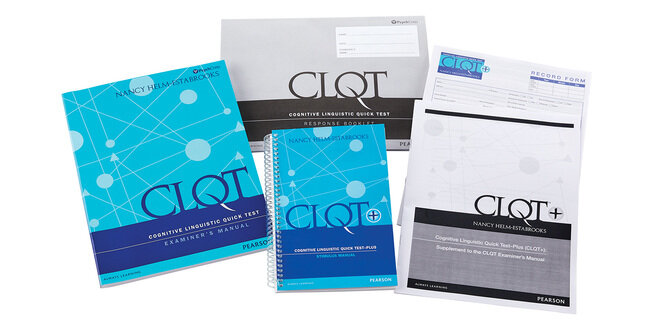
Cognitive Linguistic Quick Test-Plus (CLQT+)
“The criterion-referenced Cognitive Linguistic Quick Test (CLQT™+) quickly assesses strengths and weaknesses in five cognitive domains, and adds an optional administration path for people with aphasia.”

Communication Needs Questionnaire (ALS)
Questionnaire created by Lisa G. Bardach, CCC-SLP, ALS of Michigan 2017
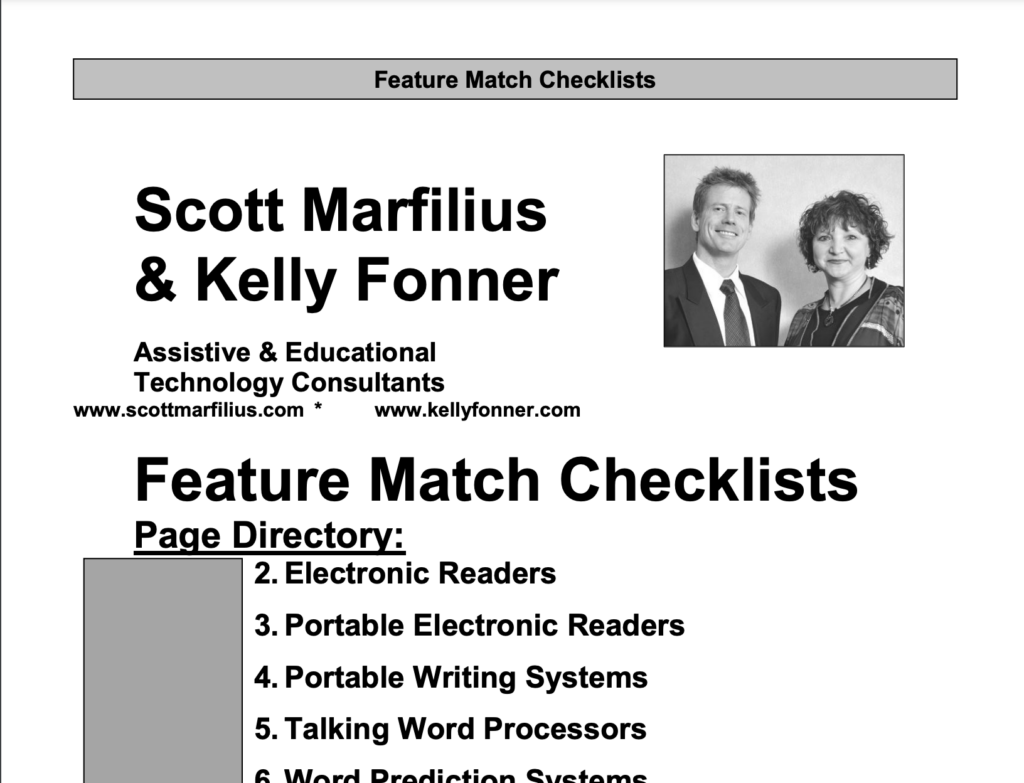
Feature Match Checklists from Scott Marfilius and Kelly Fonner
Matching Person and Technology (MPT) Assessment
The Matching Person and Technology process is a person-centered resource. It can be used to foster user engagement and guide a team in the selection of the most appropriate assistive technology or support solution.
Quality of Communication Life Scale (ASHA-QCL)
“The ASHA QCL captures information about the impact of a communication disorder on an adult’s relationships; communication; interactions; participation in social, leisure, work, and education activities; and overall quality of life. It is intended to provide information about the psychosocial, vocational, and educational effects of having a communication impairment.”

Social Networks
Social Networks is an assessment and intervention planning tool designed to help individuals, their families and professionals determine the most appropriate technologies and communication strategies for people with complex communication needs. Helps identify communication opportunities versus communication barriers.

WATI Assistive Technology Assessment Checklist
“The AT Checklist is a concise listing of assistive
technology arranged by the task for which it would be utilized. Categories are: Seating, Positioning and Mobility; Communication; Computer Access; Motor Aspects of Writing, Composition of Written
Material; Reading; Mathematics; Organization; Recreation & Leisure; Activities of Daily Living;
Vision; Hearing; and Multiple Challenges.”


Share your comments or questions.