The Things We Cannot Say


April 7, 2025

Home > Resources > Books > Book Reviews
adult historical fiction (books featuring AAC)

By: Grace Clark, SLP (speech-language pathologist); NWACS Board Member

Reading time: 2 minutes

Let’s dive into a quick overview of a book featuring AAC:

Book Title: The Things We Cannot Say

Author: Kelly Rimmer

Published in 2019

Age Range: Adults

Book Type: Historical Fiction

How AAC is Featured: The main character, Alice, has a son, Eddie, who is on the autism spectrum and uses an AAC device to communicate. The book portrays Eddie’s AAC system realistically, describing how he selects pre-programmed words and phrases to express his needs and thoughts. In addition, Alice’s grandmother, Hanna, suffers a stroke and loses her ability to speak. The family uses a communication board with simple icons and letters to help Hanna express herself.

Note: I am not an AAC user, nor am I a parent/guardian or caregiver of an AAC user. I am a speech-language pathologist. So, I am coming at the book from this perspective. 
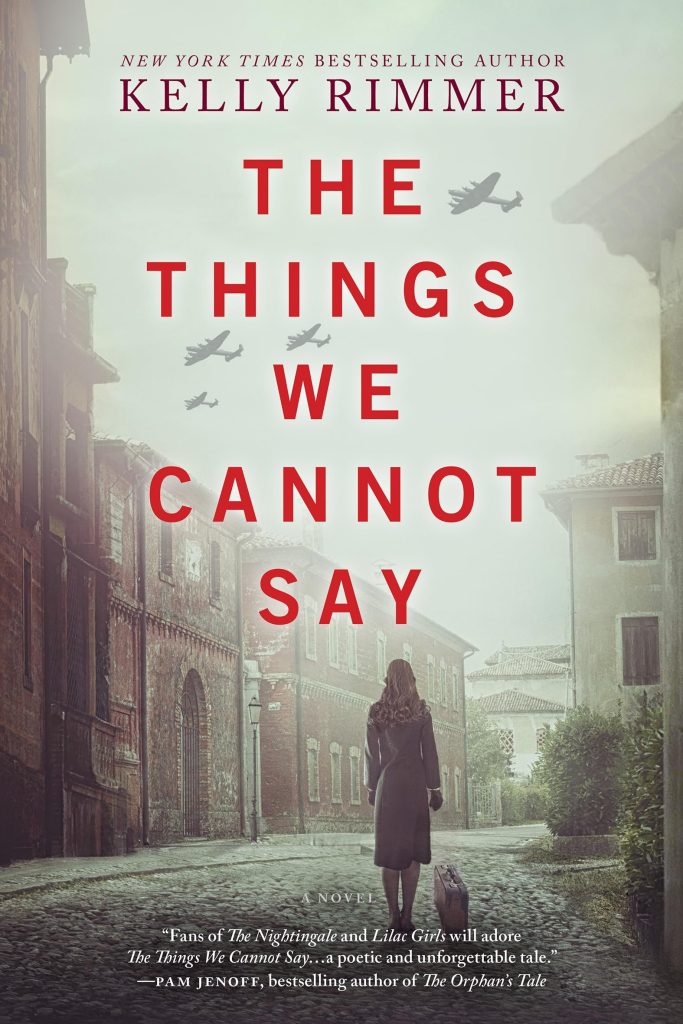
The Things We Cannot Say book cover

This book is a dual-timeline historical fiction novel. It follows Alice, a modern-day woman, as she uncovers her grandmother Hanna’s heartbreaking WWII love story in Nazi-occupied Poland. Through themes of sacrifice, resilience, and the power of unspoken words, the novel explores the enduring bonds of family and the healing power of truth.

Things I liked:

  • The realistic and respectful depiction of Eddie 
  • Eddie’s portrayal as a complex individual—beyond just his diagnosis—helped me connect with him, as I saw his diagnosis as more than just a “character trait” but as a fully realized person.
  • The author doesn’t shy away from the difficulties Eddie faces, but it also highlights his strengths, giving a balanced portrayal of life with an autistic child.

My one big wish:

Alice’s character would spend less time reflecting on the challenges of parenting Eddie. While realistic, it was seen as repetitive or overly detailed.

Have you read this book? What did you think of it?

Share your comments or questions.

Your email address will not be published. Required fields are marked *

Grace Clark

Grace Clark, PhD, CCC-SLP

Preferred Pronouns: she/her

Grace has 12 years of experience as a Speech-Language Pathologist. She is a researcher at Montclair State University, where she studies language and literacy development in children on the autism spectrum who use augmentative and alternative communication (AAC). Grace is passionate about empowering children and fostering communication access through evidence-based practices. She is committed to bridging the gap between research and practical applications, striving to make a meaningful impact in the field of AAC. Outside of work, Grace enjoys skiing, playing tennis, and camping with her husband and 2 boys.

More Content to Explore

  • adult memoir (books featuring AAC)

    The Diving Bell and the Butterfly

    July 2, 2026

    “The Diving Bell and the Butterfly” is a memoir. The author suddenly lost his ability to speak due to locked-in syndrome following a stroke at…
  • middle grade novel (books featuring AAC)

    Fooled

    January 16, 2026

    “Fooled” is a middle-grade novel. One of the main characters is a part-time AAC user with cerebral palsy. Another character has limited spoken language.
  • picture book (books featuring AAC)

    More Than Words: So Many Ways to Say What We Mean

    December 6, 2025

    “More Than Words” is a picture book. It highlights and honors many different ways people can communicate.
  • books featuring AAC - young adult novel

    Say What You Will

    November 9, 2025

    “Say What You Will” is a young adult novel. One of the main characters is an AAC user with cerebral palsy.
N W A C S logo

Northwest Augmentative Communication Society

Connect with us on social media!

Subscribe to Our Mailing List

Sign up to receive email, including news, updates, and marketing.

Donate to NWACS

Thank you for your ongoing support!


Important Website Information

By using this website, you agree that the content is for educational purposes only. It is not intended to be professional advice. Information and materials shared are to help guide creativity and support AAC use. Authored articles reflect personal perspectives and experiences. Please consult qualified professionals for specific AAC guidance. For more details, please see our Terms of Use.

Many resources shared on this website are not owned or maintained by NWACS. We are committed to accessibility, but some third-party content may not meet accessibility standards. Please review our Accessibility Statement. If you have any questions or encounter barriers, please contact us.

Privacy | Terms of Use | Accessibility Statement | Site Map

© 2016-2026 Northwest Augmentative Communication Society, a 501(c)(3) nonprofit organization