
AAC means Augmentative and Alternative Communication. AAC is anything other than speech that a person uses to help them meet their communication needs. In fact we all use some form of AAC! We are using AAC when we:
- point or gesture to support what we are saying with our mouth
- send a text, email, or written note in place of talking to communicate
The difference is that for those of us who are not disabled, we use these tools for convenience.
AAC is more than just a device. People who benefit from AAC need an AAC system. An AAC system is any device, system, strategy, and/or tool that supports a person’s communication in addition to or instead of their mouth words.
Types of Devices, Systems, or Tools
There are different types of AAC devices, systems, or tools:
- No-tech options
- Lite-tech options (also called low-tech options)
- Mid-tech options
- High-tech options
No-tech AAC
No-tech options are communication methods that use only the person’s body. Examples of no-tech AAC are:
- pointing
- gesturing
- facial expressions
- body language
- miming
- manual communication or sign language

Lite-tech AAC
Lite-tech options are communication technologies that are object-based, paper-based, or run on batteries. This includes using:
- paper and pencil to write or draw to communicate
- picture or word cards to communicate
- picture or word boards to communicate (like these free options)
Mid-tech AAC
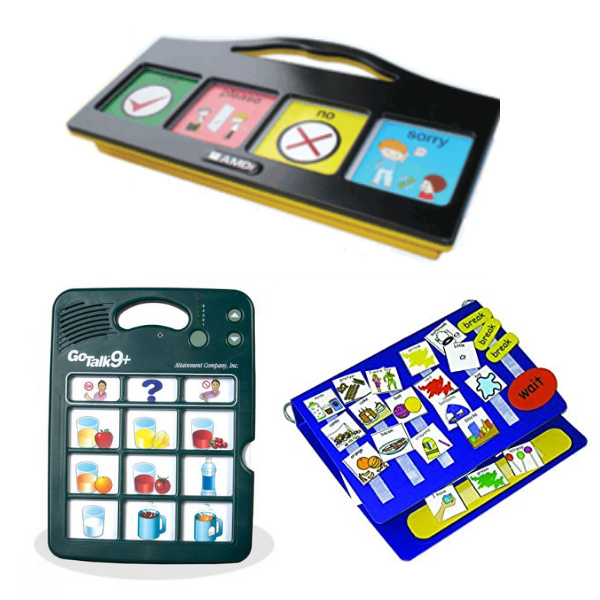
Mid-tech options are communication technologies that are usually battery-powered devices on which you can record messages to communicate. Mid-tech options include:
- single message voice output devices
- static display (single page) voice output devices
High-tech AAC
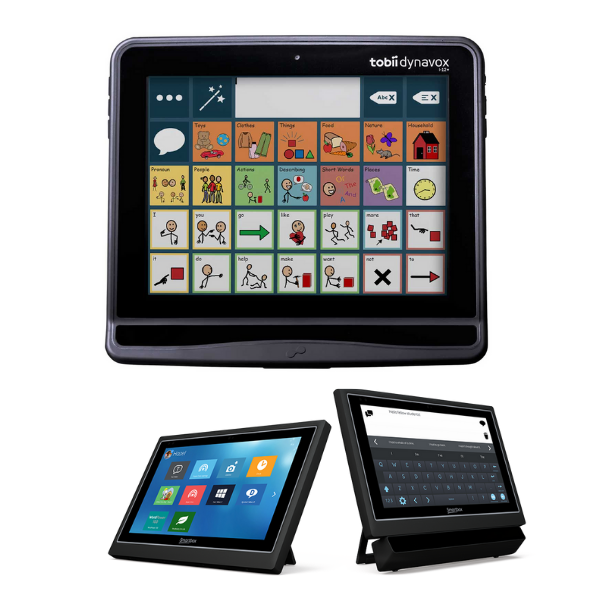
High-tech options are electronic devices that need to be recharged or plugged in. High-tech options include:
- smart phones or tablets (using texting/typing features or specialized communication apps)
- dedicated speech generating devices, or SGDspicture or word boards to communicate (like these free options)
Most people who use AAC use a range of tools to help them communicate (a “system”). Anyone with a high-tech device needs to have a lite-tech back-up system to fill-in when their electronic device is not working (like when the battery dies) or is unavailable (like while bathing).
Learn more about the options available to support people who struggle to communicate using spoken language. Check out our list of companies that sell products that support communication.



Share your comments or questions.