
This page is an exploration of Right #11 of the NJC Communication Bill of Rights.
Services and Supports
This right is all about making sure people with disabilities have what they need to express themselves — no matter their age, communication ability, or stage of life. Communication needs shift over time, and so do the tools and supports required to meet those needs. Let’s break it down.
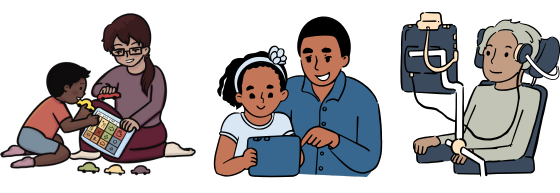
Communication Across the Lifespan
From toddlers learning to point and gesture, to older adults navigating new health challenges, communication needs evolve. A preschooler might use picture symbols to start communicating basic wants and needs while they explore high-tech AAC systems that support language and literacy development. A teenager might use their speech-generating device to join classroom discussions or argue with their siblings at home. An adult with ALS might rely on eye-tracking technology to stay connected with loved ones or create the monthly family budget.
Each person deserves access to tools and services that match their current needs. That means having access to
- speech-language therapy,
- AAC (augmentative and alternative communication) systems,
- and trained professionals who understand how communication changes over time.
What Does “Access” Really Mean?
Access isn’t just about having a device or going to therapy once. It means:
- Consistent support across environments (home, school, work, and community).
- Ongoing evaluation to make sure tools and strategies still fit their needs and preferences.
- Training for families and caregivers so they can support communication every day.
- Funding and policies that make these services available to everyone, not just a few.
Communication Partner Training Makes a Difference
Access to communication supports also means ensuring that the people around AAC users — like family, teachers, caregivers — are equipped to help. One powerful type of support is communication partner training. Research shows training communication partners can lead to meaningful gains in communication. When partners learn how to
- model AAC,
- give space for responses,
- and support independence,
AAC users thrive. These supports have been shown to increase
- conversational turns,
- independence,
- utterance length,
- and frequency of communication.
As Sarah Blackstone (2006) noted,
“Being an effective communication partner is not intuitive. It often requires one to change long-established, unconscious ways of communicating”
Supporting communication partners is not just helpful…it’s essential!
Why It Matters
When people don’t have access to communication supports, they miss out on connection, learning, and independence. They may be misunderstood, isolated, or excluded. But when we provide the right supports at the right time, we empower AAC users to
- build new relationships,
- seek out educational and employment opportunities,
- and express themselves fully — in their own way, on their own terms.
This right reminds us that communication is a human right, not a privilege. And it’s our responsibility as professionals, advocates, and community members not just to protect that right, but to uplift the voices of AAC users and empower those around them to ensure this right is upheld.
Related Resources
- Blackstone, S. (2006). Communication partner instruction. Technology & Language Center. Retrieved from https://talcaac.com/category/communication-partner-instruction/
- NWACS AAC Across the Lifespan resource

Share your comments or questions.